Modular Solution for Cosmetics Compliance
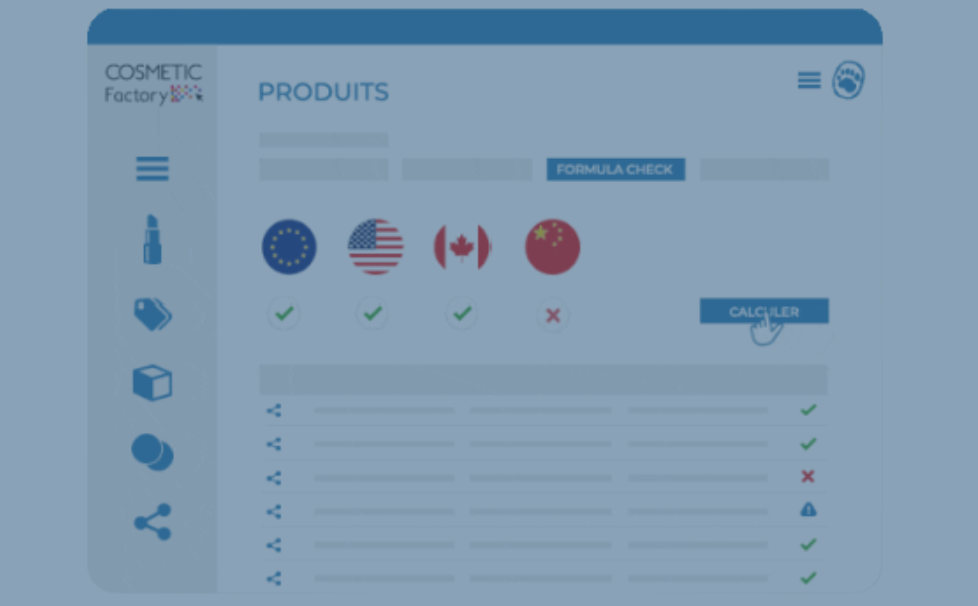
Check the Conformity of your Formulas
Secure your regulatory documents for each zone
Optimize on-site risk management
Manage your Safety Data Sheets efficiently
Automate your regulatory monitoring
Ensure the traceability of your substances
Maintain good HSE risk management
Following the announcement by the MoEUCC, substances manufactured or imported into Turkey in quantities of at least one tonne per year must be subject to temporary or permanent registration with the KKS by 30 September 2026 at the latest.
Recevez une fois par mois les dernières actus réglementaires et conseils d’experts.
The RAC and SEAC opinions mark a major step toward an EU-wide PFAS restriction under REACH, shaping future regulatory action on persistent substances.
Regulation (EU) 2026/405 brings major changes to the detergent sector. With an expanded scope, stronger environmental requirements, the Digital Product Passport and clarified roles for operators, the new framework reshapes compliance obligations. Learn what companies must prepare for by 2029.
Compare UV filters and SPF testing methods across the EU, US, and Canada. Understand key regulatory differences and their impact on sunscreen compliance.
Learn when cosmetic reformulation is required. Discover key regulatory, safety, and market triggers that may impact your product compliance.
Learn how to verify cosmetic formula compliance across EU, US, and Canada with a practical, expert guide. Avoid reformulation and regulatory risks.
Ukraine has adopted a new cosmetic regulation aligned with EU Regulation (EC) No 1223/2009, introducing stricter safety, compliance, and market surveillance requirements.