


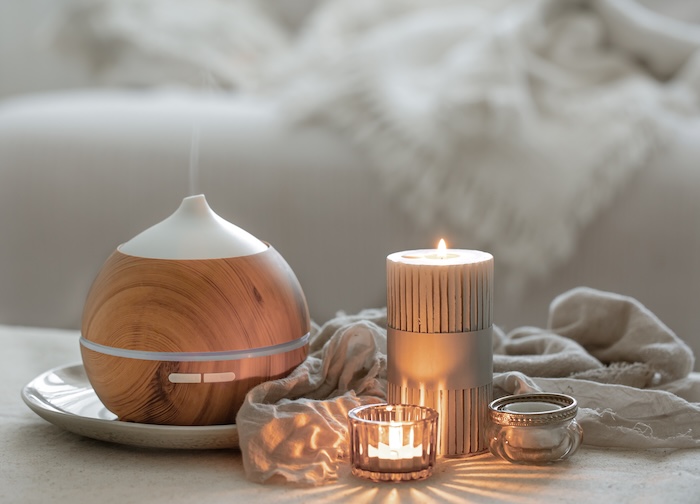
A wick lit at dusk. A few rattan reeds immersed in an amber bottle. A thin trail of smoke rising from an incense stick. Home fragrance products tell a story: of a place, a season, an emotion. They turn a room into a retreat.
But a home fragrance is not only smelled: it is inhaled. For hours at a time, in a living room or bedroom, its molecules mix with the air shared by adults and children. For those responsible for placing products on the market, safety and compliance are essential considerations, inseparable from the creative process. How can you ensure that an olfactory signature, however beautiful, remains safe for those who live with it every day?
Fragrance, the sensitive core of your home fragrance products
Home fragrance products combine several key challenges: they are designed to diffuse fragrance, their formulations are complex, and consumers are exposed through inhalation.
A rich… and complex composition
Behind a fig or cedar note often lies a blend of several dozen natural and synthetic ingredients. Essential oils, absolutes and aroma molecules all contribute to the olfactory harmony, and each has its own toxicological profile.
Allergens, sensitising substances and ingredients under scrutiny
Certain fragrance molecules, such as limonene or linalool, are known allergens. Others are classified, or currently under assessment, for suspected effects on reproduction or the endocrine system. Naturally derived compounds are no exception: a single essential oil may contain several substances of concern.
IFRA compliance: a starting point
The IFRA certificates provided by fragrance creators are an important prerequisite. They address the dermal safety of ingredients, particularly the risk of sensitisation, but they do not cover inhalation exposure. Yet this is precisely the main exposure route for a home fragrance product: the same fragrance does not result in the same exposure when it slowly evaporates from a diffuser as when it is released by a candle burning throughout the evening.
From creation to indoor air: considering exposure
Inhalation, the main route of exposure
A home fragrance product is designed to release fragrant molecules into the air. That is its purpose, and it is also what makes inhalation the main route of exposure. The amount of fragrance inhaled depends on how the product releases its notes, the size of the room, the duration of use and how frequently it is used.
Some consumers are more vulnerable than others
An infant sleeping in a room where a candle is burning, a pregnant woman, or a person with asthma: not everyone responds in the same way to the same molecules. A robust safety assessment takes these populations into account from the outset.
A responsibility that must be documented
The EU General Product Safety Regulation (GPSR) requires each party responsible for placing a product on the market to be able to demonstrate, with supporting documentation, that its products are safe under normal or reasonably foreseeable conditions of use. Home fragrance products are also subject to the CLP Regulation with regard to labelling. In practical terms, this means carrying out a risk assessment for each product and ensuring compliant labelling.
Our methodology: a quantitative, ingredient-by-ingredient risk assessment
At EcoMundo, we have made a deliberate choice: rather than relying on a purely qualitative assessment of the product, we quantify the risk for each ingredient where this is relevant. Our approach follows a simple logic: who inhales what, in what quantity, and from what level could this become a concern?
Screening every ingredient
Each component of the formula is reviewed, including the fragrance. Substances requiring particular attention are then subject to an advanced assessment.
Calculating actual exposure
For each of these substances, we calculate the concentration in the air inhaled by occupants using recognised European models adapted to the intended use of your product.
Comparing exposure with a toxicological reference value
This exposure is compared with the substance’s DNEL: the level below which no adverse health effects are expected for the general population. Every value is reviewed by our toxicologists. Published DNELs are checked before being selected, and where no value is available, our experts derive one from the available data.
A quantified conclusion and practical recommendations
The outcome is not a general impression, but a calculated margin of safety for each substance assessed. If the margin is insufficient for any substance, we provide practical recommendations: adjusting the fragrance concentration, replacing an ingredient, or refining the instructions for use. It is this ingredient-by-ingredient rigour that supports the safety of your finished product.
EcoMundo support: home fragrance safety, from formula to safety report
Our experts support brands and fragrance houses at every stage, with one objective: to allow you to create with confidence and peace of mind.
Simple and confidential data collection
A clear checklist tells you which information needs to be gathered: detailed composition, including fragrance, supplier documentation and use parameters. Your formulas remain strictly confidential.
A dedicated assessment for each product
Each product reference is assessed individually, based on its actual conditions of use: formula, fragrance, format and diffusion method. Whether you are launching a new product or assessing an existing range, you receive a specific conclusion for every product placed on the market.
A clear and sustainable safety report
Each assessment results in a safety report that provides a clear conclusion and can be integrated into your technical documentation. It can be updated in line with reformulations, developments in scientific knowledge and applicable regulatory requirements.
Fragrance creators: support from the earliest stages
We also support perfumers and fragrance houses. Our regulatory monitoring tracks changes to substance lists, including classifications, restrictions and substances of concern, and alerts you as soon as an ingredient used in your compositions is affected.
We also assess the safety of your fragrances under standard conditions of use across a defined range of scenarios: candles, diffusers and incense, as well as room sprays, car air fresheners, textile fragrances and many other applications. This gives you robust supporting evidence to share with the brands that rely on your expertise.
Review and compliance of your product labels
We also review your labels against the requirements applicable in each country where your products are marketed, ensuring that statements, warnings and pictograms are compliant before the product is placed on the market.
International coverage
We support your products across their key markets: the European Union, the United Kingdom, Canada and the United States.
Preparing a new collection? Looking to strengthen the safety of an existing range? Contact our experts to assess the safety of your Home Fragrance products.

A wick lit at dusk. A few rattan reeds immersed in an amber bottle. A thin trail of smoke rising from an incense stick. Home fragrance products tell a story: of a place, a season, an emotion. They turn a room into a retreat.
But a home fragrance is not only smelled: it is inhaled. For hours at a time, in a living room or bedroom, its molecules mix with the air shared by adults and children. For those responsible for placing products on the market, safety and compliance are essential considerations, inseparable from the creative process. How can you ensure that an olfactory signature, however beautiful, remains safe for those who live with it every day?
Fragrance, the sensitive core of your home fragrance products
Home fragrance products combine several key challenges: they are designed to diffuse fragrance, their formulations are complex, and consumers are exposed through inhalation.
A rich… and complex composition
Behind a fig or cedar note often lies a blend of several dozen natural and synthetic ingredients. Essential oils, absolutes and aroma molecules all contribute to the olfactory harmony, and each has its own toxicological profile.
Allergens, sensitising substances and ingredients under scrutiny
Certain fragrance molecules, such as limonene or linalool, are known allergens. Others are classified, or currently under assessment, for suspected effects on reproduction or the endocrine system. Naturally derived compounds are no exception: a single essential oil may contain several substances of concern.
IFRA compliance: a starting point
The IFRA certificates provided by fragrance creators are an important prerequisite. They address the dermal safety of ingredients, particularly the risk of sensitisation, but they do not cover inhalation exposure. Yet this is precisely the main exposure route for a home fragrance product: the same fragrance does not result in the same exposure when it slowly evaporates from a diffuser as when it is released by a candle burning throughout the evening.
From creation to indoor air: considering exposure
Inhalation, the main route of exposure
A home fragrance product is designed to release fragrant molecules into the air. That is its purpose, and it is also what makes inhalation the main route of exposure. The amount of fragrance inhaled depends on how the product releases its notes, the size of the room, the duration of use and how frequently it is used.
Some consumers are more vulnerable than others
An infant sleeping in a room where a candle is burning, a pregnant woman, or a person with asthma: not everyone responds in the same way to the same molecules. A robust safety assessment takes these populations into account from the outset.
A responsibility that must be documented
The EU General Product Safety Regulation (GPSR) requires each party responsible for placing a product on the market to be able to demonstrate, with supporting documentation, that its products are safe under normal or reasonably foreseeable conditions of use. Home fragrance products are also subject to the CLP Regulation with regard to labelling. In practical terms, this means carrying out a risk assessment for each product and ensuring compliant labelling.
Our methodology: a quantitative, ingredient-by-ingredient risk assessment
At EcoMundo, we have made a deliberate choice: rather than relying on a purely qualitative assessment of the product, we quantify the risk for each ingredient where this is relevant. Our approach follows a simple logic: who inhales what, in what quantity, and from what level could this become a concern?
Screening every ingredient
Each component of the formula is reviewed, including the fragrance. Substances requiring particular attention are then subject to an advanced assessment.
Calculating actual exposure
For each of these substances, we calculate the concentration in the air inhaled by occupants using recognised European models adapted to the intended use of your product.
Comparing exposure with a toxicological reference value
This exposure is compared with the substance’s DNEL: the level below which no adverse health effects are expected for the general population. Every value is reviewed by our toxicologists. Published DNELs are checked before being selected, and where no value is available, our experts derive one from the available data.
A quantified conclusion and practical recommendations
The outcome is not a general impression, but a calculated margin of safety for each substance assessed. If the margin is insufficient for any substance, we provide practical recommendations: adjusting the fragrance concentration, replacing an ingredient, or refining the instructions for use. It is this ingredient-by-ingredient rigour that supports the safety of your finished product.
EcoMundo support: home fragrance safety, from formula to safety report
Our experts support brands and fragrance houses at every stage, with one objective: to allow you to create with confidence and peace of mind.
Simple and confidential data collection
A clear checklist tells you which information needs to be gathered: detailed composition, including fragrance, supplier documentation and use parameters. Your formulas remain strictly confidential.
A dedicated assessment for each product
Each product reference is assessed individually, based on its actual conditions of use: formula, fragrance, format and diffusion method. Whether you are launching a new product or assessing an existing range, you receive a specific conclusion for every product placed on the market.
A clear and sustainable safety report
Each assessment results in a safety report that provides a clear conclusion and can be integrated into your technical documentation. It can be updated in line with reformulations, developments in scientific knowledge and applicable regulatory requirements.
Fragrance creators: support from the earliest stages
We also support perfumers and fragrance houses. Our regulatory monitoring tracks changes to substance lists, including classifications, restrictions and substances of concern, and alerts you as soon as an ingredient used in your compositions is affected.
We also assess the safety of your fragrances under standard conditions of use across a defined range of scenarios: candles, diffusers and incense, as well as room sprays, car air fresheners, textile fragrances and many other applications. This gives you robust supporting evidence to share with the brands that rely on your expertise.
Review and compliance of your product labels
We also review your labels against the requirements applicable in each country where your products are marketed, ensuring that statements, warnings and pictograms are compliant before the product is placed on the market.
International coverage
We support your products across their key markets: the European Union, the United Kingdom, Canada and the United States.
Preparing a new collection? Looking to strengthen the safety of an existing range? Contact our experts to assess the safety of your Home Fragrance products.


